
Protein Calculator Daily Intake Target
Protein is one of the most important nutrients your body needs every day. It supports muscle growth, helps repair tissues, contributes to healthy skin and hair, and can help you feel full after meals. However, the amount of protein you need is not the same for everyone.
Your ideal daily protein intake can depend on factors such as your body weight, age, activity level, fitness goals, and lifestyle. This is where a Daily Intake Target Protein Calculator can make things easier.
Instead of trying to calculate your protein needs manually, you can use our simple tool to estimate how much protein you may need each day.
What Is a Daily Protein Intake Target?
Your daily protein intake target is an estimated amount of protein you should consume throughout the day based on your individual needs.
Protein is made up of amino acids, which your body uses for many important functions. While protein is commonly associated with bodybuilding and muscle gain, it is important for almost everyone.
A person who exercises regularly may need more protein than someone with a sedentary lifestyle. Similarly, someone trying to build muscle may have a different target from someone simply trying to maintain their current weight.
Our Daily Intake Target Protein Calculator provides a convenient starting point for understanding your personal protein requirements.
Why Is Protein Important?
Protein plays several important roles in the body. One of its best-known functions is supporting muscle tissue.
When you exercise, particularly during resistance training, your muscles experience stress and need nutrients to recover. Getting enough protein as part of a balanced diet can support muscle repair and development.
Protein can also help you stay satisfied between meals. Foods containing protein may help reduce hunger and make it easier to manage your overall food intake.
Other important functions of protein include:
- Supporting muscle maintenance
- Helping repair body tissues
- Contributing to enzymes and hormones
- Supporting normal immune function
- Helping maintain bones and other tissues
- Providing energy when needed
Because protein has so many functions, getting an appropriate amount each day is an important part of a balanced diet.
How Does Our Daily Intake Target Protein Calculator Work?
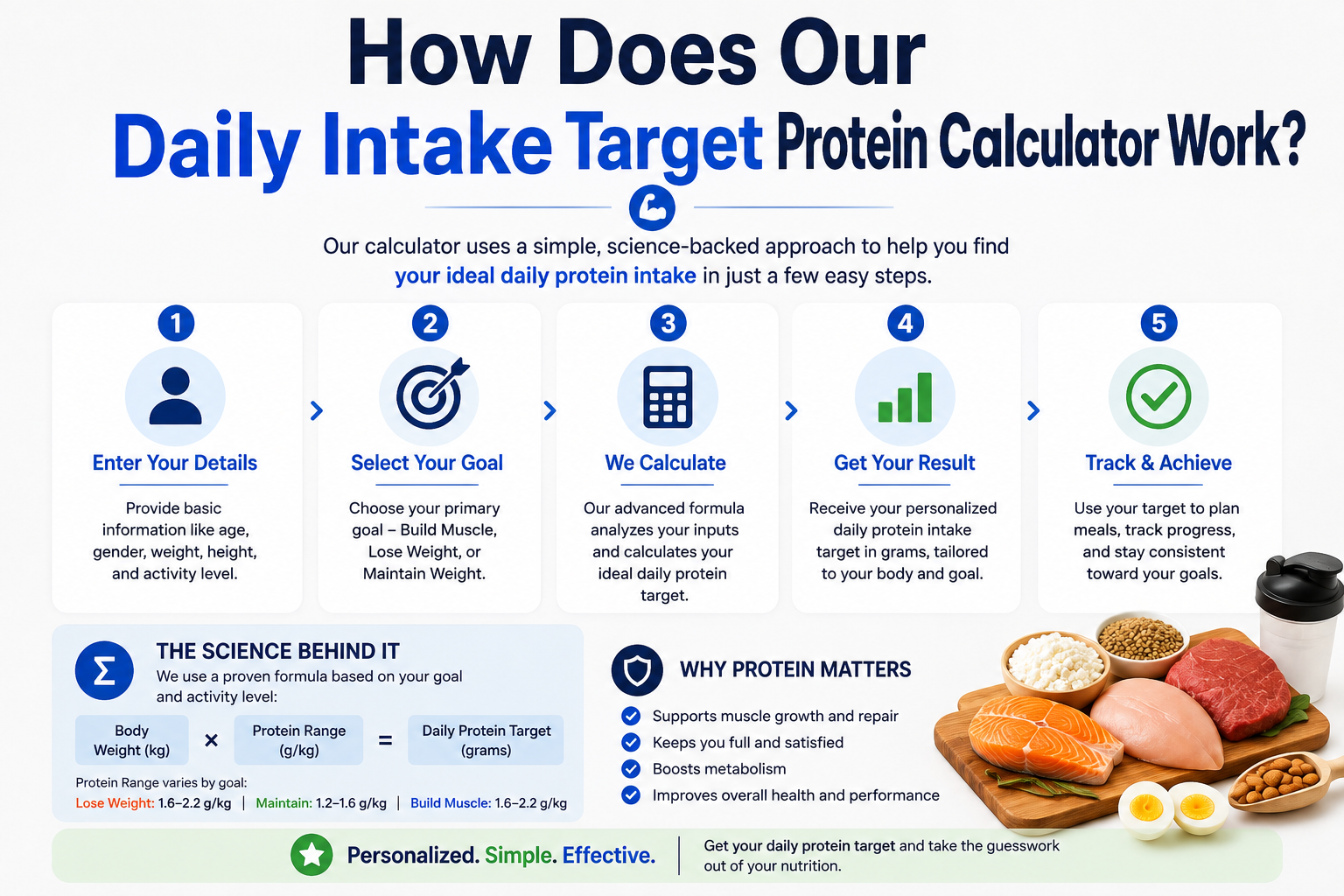
Our tool is designed to make protein calculations simple.
Depending on the information requested by the calculator, you may enter details such as your weight, age, activity level, gender, and fitness goal. The calculator then uses these inputs to estimate a suitable daily protein target.
The result is typically presented in grams of protein per day.
For example, two people can have the same body weight but different protein requirements because one person may be highly active while the other has a sedentary lifestyle.
The calculator helps account for these differences and gives you a more personalized estimate than using a single protein number for everyone.
How Much Protein Do You Need Per Day?
There is no single protein target that is perfect for every person.
For healthy adults, general nutrition recommendations often start around 0.8 grams of protein per kilogram of body weight per day. However, people who exercise frequently, participate in strength training, or have specific fitness goals may benefit from higher protein intake.
For example, someone who weighs 70 kg and uses 0.8 g/kg as a basic reference would get:
70 × 0.8 = 56 grams of protein per day
This is only an example and should not be treated as a personalized recommendation.
Your actual target can vary depending on your activity level, goals, age, and overall health. Our calculator is intended to make this estimation faster and easier.
Protein Intake for Different Goals
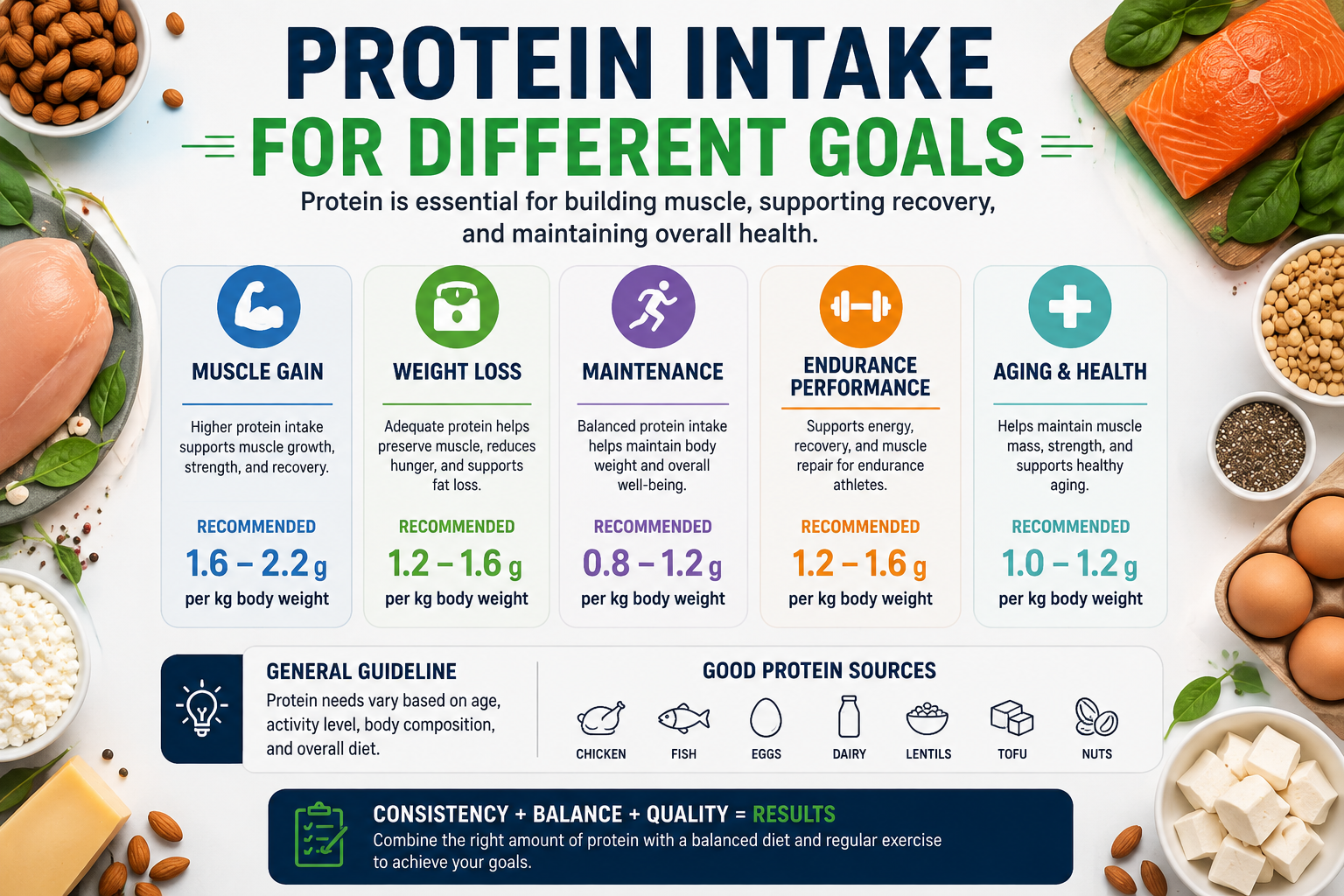
Your fitness goal can influence how much protein you may want to consume.
Muscle Building
People focused on building muscle often pay particular attention to protein intake. Adequate protein combined with resistance training can support muscle growth and recovery.
Weight Management
Protein-rich foods can help you feel full, which may be useful when managing calorie intake. A balanced diet containing sufficient protein can make it easier to maintain a structured eating plan.
General Health
You do not need to be a bodybuilder to care about protein. Protein is an essential nutrient, and consuming an appropriate amount supports normal body functions.
Active Lifestyle
People who regularly run, cycle, swim, lift weights, or participate in sports may have different protein needs from people who perform little physical activity.
Best Sources of Protein
You can get protein from a wide variety of foods. Choosing different protein sources can help you maintain a balanced and varied diet.
Common protein-rich foods include:
- Eggs
- Chicken
- Fish
- Lean meat
- Milk
- Yogurt
- Cheese
- Beans
- Lentils
- Chickpeas
- Tofu
- Soy products
- Nuts and seeds
Both animal and plant foods can contribute to your daily protein intake.
If you follow a vegetarian or vegan diet, foods such as lentils, beans, chickpeas, tofu, soy products, nuts, and seeds can be useful protein sources.
How to Reach Your Daily Protein Target
Once you know your estimated protein target, try spreading your intake across your meals rather than focusing on one large meal.
For example, you could include a protein source at breakfast, lunch, dinner, and snacks.
A simple day might include eggs or yogurt at breakfast, chicken or lentils at lunch, a protein-rich snack during the day, and fish, tofu, or beans at dinner.
The goal is not simply to reach a number. Overall food quality, calories, carbohydrates, fats, fiber, vitamins, minerals, and hydration also matter.
Is More Protein Always Better?
Not necessarily.
Protein is essential, but consuming extremely large amounts does not automatically lead to better results. Your body has nutritional needs beyond protein, so a healthy diet should include a variety of foods.
People with certain medical conditions, particularly conditions affecting kidney function, may need individualized dietary advice. If you have a medical condition or are unsure about your protein needs, speak with a qualified healthcare professional or registered dietitian.
Who Should Use a Protein Calculator?
A Daily Intake Target Protein Calculator can be useful for many people, including:
- Beginners starting a fitness routine
- People tracking their nutrition
- Strength-training enthusiasts
- Athletes
- People managing their weight
- People interested in healthy eating
- Anyone who wants a quick protein estimate
The calculator is especially useful when you want a simple starting point instead of performing calculations yourself.
Start Using Our Daily Intake Target Protein Calculator
Understanding your protein needs does not have to be complicated. Our Daily Intake Target Protein Calculator provides a quick way to estimate your daily protein requirement based on the information you provide.
Simply enter your details into the tool and review your estimated target. You can then use the result to plan meals and choose protein-rich foods that fit your lifestyle.
Remember that the calculator provides an estimate, not a medical diagnosis or individualized medical prescription. Your nutritional needs can change over time as your weight, activity level, goals, and health status change.
Use our calculator regularly as a convenient reference and combine it with a balanced diet and a healthy lifestyle.
Frequently Asked Questions (FAQs)
1. What is a Daily Intake Target Protein Calculator?
A Daily Intake Target Protein Calculator is an online tool that estimates how much protein you may need each day based on information such as body weight, activity level, and goals.
2. How much protein should I eat per day?
Protein requirements vary from person to person. A commonly used baseline for healthy adults is around 0.8 grams per kilogram of body weight per day, while active individuals may require more.
3. Is the protein calculator accurate?
The calculator provides an estimate based on the information entered and the calculation method used. Individual nutritional needs can vary, so the result should be considered a helpful guideline rather than an exact medical requirement.
4. Can a protein calculator help with muscle building?
Yes. A protein calculator can help you estimate a daily protein target, which can be useful when planning a diet to support muscle growth alongside appropriate resistance training.
5. Can protein help with weight management?
Protein can contribute to feelings of fullness and can be part of a balanced eating plan for weight management. However, overall calorie intake and diet quality are also important.
6. What foods are high in protein?
Common protein-rich foods include eggs, chicken, fish, meat, dairy products, beans, lentils, chickpeas, tofu, soy products, nuts, and seeds.
7. Should I eat protein at every meal?
Including a source of protein with meals can be a practical way to spread your daily intake throughout the day. Your exact meal pattern can depend on your preferences and nutritional goals.
8. Do athletes need more protein?
People who train regularly, particularly those involved in strength or endurance activities, may have higher protein needs than sedentary individuals. Their exact target depends on factors such as training volume, body size, and goals.
9. Can vegetarians get enough protein?
Yes. Vegetarian diets can provide adequate protein through foods such as lentils, beans, chickpeas, dairy products, eggs, tofu, soy foods, nuts, and seeds.
10. Is this calculator a medical tool?
No. The calculator is intended for general informational and educational purposes. It should not replace personalized advice from a doctor, registered dietitian, or other qualified healthcare professional.
Final Thoughts
Protein is an essential part of a balanced diet, whether your goal is building muscle, supporting an active lifestyle, managing your weight, or simply maintaining good nutrition.
Because protein needs differ between individuals, using a Daily Intake Target Protein Calculator can give you a convenient starting point. Enter your information, review your estimated daily target, and use it to make smarter choices about your meals.
For the best results, focus on your overall diet rather than protein alone. A balanced combination of protein, carbohydrates, healthy fats, fruits, vegetables, whole grains, and adequate hydration can help support a healthy lifestyle.